
“Ordinary Joes”: What happens when we each play our part in the ordinary, day-to-day? A Lesson on Faith and Stewardship

I’ve been mulling this item since Monday of the third week of Lent. But on the Feast of Saint Joseph, a posting on Catholic Insight gave me the title and neatly summarized the theme I am trying to express: “Ordinary Joes”. It was applied in that posting to the very least ordinary of Joes, but author April St. Martin had a point: our job in this life is to play the role that is assigned to us, no matter what it is, great or small, in devout keeping with the virtues of faith and deep humility. READ REFLECTION HERE [CTA Button/Link to full reflection on website]

If we do that, who knows what God might be able to accomplish through us?

The reading on that Monday was from the Second book of Kings (2 Kings 5:1-15):

Naaman, commander of the army of the king of Aram, was a great man and in high favour with his master, because by him the Lord had given victory to Aram. The man, though a mighty warrior, suffered from leprosy.

Now the Arameans on one of their raids had taken a young girl captive from the land of Israel, and she served Naaman’s wife. She said to her mistress, “If only my lord were with the prophet who is in Samaria! He would cure him of his leprosy.” So Naaman went in and told his lord just what the girl from the land of Israel had said. And the king of Aram said, “Go then, and I will send along a letter to the king of Israel.”

He went, taking with him ten talents of silver, six thousand shekels of gold, and ten sets of garments. He brought the letter to the king of Israel, which read, “When this letter reaches you, know that I have sent to you my servant Naaman, that you may cure him of his leprosy.”

When the king of Israel read the letter, he tore his clothes and said, “Am I God, to give death or life, that this man sends word to me to cure a man of his leprosy? Just look and see how he is trying to pick a quarrel with me.” But when Elisha the man of God heard that the king of Israel had torn his clothes, he sent a message to the king, “Why have you torn your clothes? Let him come to me, that he may learn that there is a prophet in Israel.”

So Naaman came with his horses and chariots, and halted at the entrance of Elisha’s house. Elisha sent a messenger to him, saying, “Go, wash in the Jordan seven times, and your flesh shall be restored and you shall be clean.” But Naaman became angry and went away, saying, “I thought that for me he would surely come out,  and stand and call on the name of the Lord his God, and would wave his hand over the spot, and cure the leprosy! Are not Abana and Pharpar, the rivers of Damascus, better than all the waters of Israel? Could I not wash in them, and be clean?” He turned and went away in a rage.

But his servants approached and said to him, “Father, if the prophet had commanded you to do something difficult, would you not have done it? How much more, when all he said to you was, ‘Wash, and be clean’?” 

So Namaan went down and immersed himself seven times in the Jordan, according to the word of the man of God; his flesh was restored like the flesh of a young boy, and he was clean.

Then he returned to the man of God, he and all his company; he came and stood before him and said, “Now I know that there is no God in all the earth except in Israel.

Now, in this passage, at least seven people are mentioned. Several are both named and quoted, including a king, a military commander, and a prophet. The great points we are apparently meant to take away from the passage are the saving faith and humility of the great commander before people he had helped to conquer; and the casual yet exquisitely faithful disdain of the prophet, who declined to meet face to face with the foreign conqueror even while arranging his cure.

But who is the real hero of this story, the one without whom nothing would have come to pass except the ultimate demise of Naaman through leprosy? Of all these characters, who is it that displays the greatest humility? Who acts in the spirit of deepest, cheerful faith, despite what might seem like compelling reasons to rebel?

The behavior of the “young girl taken captive from the land of Israel,” who served Naaman’s wife, has always struck me as astonishing.

It seems highly probable that this young lady’s introduction to the family she served involved the slaughter or enslavement of her own family, or at the very least her involuntary separation from the home, her neighbours, and the land in which she had been born, not to mention the loss of her own life’s freedom. Yet from all appearances, she cheerfully stepped up to aid her oppressor, the conqueror of her people, in his need. Far beyond the virtue of stooping to the level of the beaten in order to obtain a cure, or of deigning to cure an enemy without the inconvenience of meeting him face to face, this strikes me as turning the other cheek, going the extra mile, and adding tunic to cloak as mentioned later on the Mount of Beatitudes.

As April St. Martin explains, holiness seems less often to be tied up with the things we say, the preaching we do, than with the actions we elect to undertake: simply serving in the capacity and the circumstances that God has placed before us. Sometimes that involves the freedom to make choices; other times not. Joseph the son of Jacob served his oppressors faithfully, and thereby was enabled to rescue his entire nation; Joseph the foster-father of Our Lord showed up, obeyed, protected, and worked, and thereby was enabled to facilitate the coming and the mission of the Messiah. How many porters and doorkeepers have served their way to sainthood? The unnamed girl of 2nd Kings 5 faithfully shared the Good News of God and his prophets with those she was compelled to serve, without apparently seeking any quid pro quo.

In our own lives, we can seek opportunities for simple, quiet service by accepting the families, the homes, the work, and all the other circumstances God has provided for us. And we can usually do more than that, without a great deal of trouble: in a spirit of proper stewardship, we can invest a little of the time that God has entrusted to us in humble contributions to the building of his Kingdom.

For example, we can take the time to pray, to educate ourselves, and to vote, when the time comes, with the good of everyone in mind; and we can take the time to get to know those we’ve elected to serve us, and attempt to prompt them into setting policies based on values of virtue.

It doesn’t seem like a lot, compared to what was asked of Saint Joseph or the young saint-girl of 2nd Kings. April St. Martin put it very well:

“It made me realize that holiness isn’t about being seen or recognized, but about being faithful in what you’ve been given.”

Just think: if we do that, if we faithfully use all the time, talent, that are given to us, in the circumstances that are given to us, for God’s purposes, what great things might God accomplish through us?

An appeal for support from the Cardinal Archbishop of Toronto for a humane limitation to Socially-Assisted Death

We inaugurate our new Calls-to-Action section of the newsletter with an appeal for support from the Cardinal Archbishop of Toronto for a humane limitation to Socially-Assisted Death. The full, unedited letter is presented below.

<Text of letter>

March 2026

Dear Brothers and Sisters in Christ,

May Jesus and Mary be in your hearts.

I pray you are living a grace-filled and prayerful Lent. In strengthening the body of Christ in our archdiocese, we hope to communicate electronically more regularly in the months ahead regarding matters of importance to our Catholic community. If these updates are not helpful, you can always unsubscribe through the link provided below.

As you know, our faith teaches us that every human life is sacred — from conception to natural death. Each person is created in the image and likeness of God. No suffering, however profound, ever diminishes that dignity. I am also keenly aware of the pain and anguish of mental illness that has touched the lives of so many parishioners, family members, colleagues and loved ones.

I write today to invite you to visit HelpNotHarmCanada.ca and contact your Member of Parliament (MP) in support of Bill C-218, a private members’ bill that would amend the Criminal Code to prevent Medical Assistance in Dying (MAiD) when mental illness is the sole underlying condition. The entire process should take no more than three minutes. Tragically, euthanasia in our country has expanded at an alarming rate – we must elevate our voices to halt further harm, fostering a culture of life and loving support to care for one another.

Time is of the essence. Bill C-218 is scheduled for second reading in early April 2026, with a vote expected by mid-April. Without this legislation, the law will expand to provide MAiD for those with mental illness as the sole underlying condition as of March 17, 2027.

 Mental illness is real and deeply painful. Yet important truths must guide us:

  • A desire to die can be a symptom of mental illness itself.
  • Mental illness is often treatable, and recovery remains possible.
  • Serious gaps in mental health care support persist in Canada.
  • Those who suffer are frequently among the most vulnerable.

Our response must be love, solidarity, and a steadfast commitment to care. We are called to offer help, not harm; hope, not despair; protection, not abandonment.I encourage you to visit HelpNotHarmCanada.ca and respectfully urge your MP, regardless of party affiliation, to vote their conscience and support Bill C-218. I will also be writing to all Members of Parliament in the Archdiocese of Toronto, as well as to the Prime Minister and the Minister of Justice to share my deep concern. You may also wish to read a recent statement by the Canadian Conference of Catholic Bishops on this issue.

Advocating for laws that protect life is a meaningful expression of our faith in action — most especially during this Lenten journey, a time of prayer, fasting and almsgiving.

Let us pray for our elected officials, that they may be guided by wisdom and courage. May we also hold close in prayer all who live with mental illness and their families, that they may receive compassionate care and renewed hope. Thank you for your kind consideration of my request. Be assured of my prayers for you and your loved ones.

Yours sincerely in Jesus with Mary,

Frank Cardinal Leo
Metropolitan Archbishop of Toronto

Of Common Concern: Just War, Revisited

The eruption of new conflicts in the Caribbean and in Western Asia suggests that debate over Just War doctrine will remain active for the foreseeable future. Current debate suggests several points to ponder.

As explained in our previous Just War posting, classic Catholic doctrine imposes strict conditions on the use of military force, even in defense. Among other criteria, in the Catholic view all other options must be exhausted before resort to violence can even conceivably be justified. (Catechism 2302-2308).  This was strongly reinforced in Fratelli tutti. Pope Francis pointed out that in practice war is often started by aggressors:

...invoking all sorts of allegedly humanitarian, defensive or precautionary excuses, and even resorting to the manipulation of information. In recent decades, every single war has been ostensibly “justified…” [A critical] issue is whether the development of nuclear, chemical and biological weapons, and the enormous and growing possibilities offered by new technologies, have granted war an uncontrollable destructive power over great numbers of innocent civilians. The truth is that never has humanity had such power over itself, yet nothing ensures that it will be used wisely. We can no longer think of war as a solution, because its risks will probably always be greater than its supposed benefits. In view of this, it is very difficult nowadays to invoke the rational criteria elaborated in earlier centuries to speak of the possibility of a ‘just war.’ Never again war! (1)

Points to Ponder: 

  • Several justifications for US and Israeli intervention in Iran have been offered to the public, including imminent military threats posed by Iran, regional aggression on the part of Iran, and prophetic religious grounds. Similarly, the threat of narco-terrorism was cited in support of US intervention in Venezuela. Importantly, in each case ex-patriates and other natives of the target countries have voiced support for the intervenors’ vigorous action, citing long-standing maltreatment of local citizens and the utterance and realization of various threats.In each case, however, it is also true that each of the cited grounds has been questioned, sometimes at apparent personal cost to those who refute them.For example, it is widely reported that the director of the US National Counter-terrorism Center resigned on grounds of conscience, noting that no imminent threat to the US existed. Likewise, it is reported that shortly before direct US intervention in Venezuela, a senior US Navy admiral took voluntary early retirement. Others have criticized the interventions on legal grounds, while Pope Leo XIV has pleaded for peace and efforts to avoid a spiral of violence. (2)How can the justifications offered be considered fairly? For example:
    • Under classical Catholic Just War doctrine, can pre-emptive attacks ever be justified?
      • Does the fact that multiple justifications, each of them in turn disputed, were offered after the fact, help or hurt the cases offered for pre-emptive strikes?
      • If it is possible to justify such attacks under classic doctrine, do the clarifications offered by Pope Francis alter the analysis?
      • As noted, in some cases the legality of the attacks under national laws has been questioned.(2) How do universal moral and national legal requirements relate to one another?
  • Estimates of both the human and economic effects of the war vary widely. (3)For example, the US and Israel report the deaths of approximately 30 of their own soldiers, and several thousand deaths among civilians, many of them among Arab neighbours of the combatants. Iran is reported to have suffered approximately 6,000 deaths, military and civilian. In Venezuela, dozens of people were killed, apparently in order to effect two extraordinary arrests. Between the two actions, economic damage is reported to exceed tens or potentially even hundreds of billions of dollars. Environmental damage has not yet been reliably assessed.
    • Do the number of reported deaths affect your conclusions about stated justifications for the attacks? What about economic or environmental costs?
      • Human losses would not appear to be fully compensable in this life, meaning that judgment for those will reside with Christ.
      • Who will bear the economic and environmental costs? Will they be borne by the same people who have incurred them, or passed to others?
  • In the Iran conflict, both sides have used robotic and remotely-controlled weapons in their strikes, including weapons programmed to target specific individuals. In several cases, such attacks have resulted in the “collateral” deaths of individuals who were not specifically targeted, but who happened to be close to the intended targets.
    • Can the use of robotic weapons be justified? Can targeted military or political assassination be justified? Do “collateral” deaths of innocent bystanders matter to your answer?
  • In the Democratic West, reports of the ongoing effect of the war have sometimes tended to focus on domestic prices for commodities such as gasoline and food. (5)
    • Does Catholic social doctrine support consideration of the price of local consumer commodities to justify wars that are reported to have killed thousands of people?
  • To the extent that violent military intervention has not been justified, and given that several of the stated grievances would seem to bear weight, what non-violent alternatives might be available to the various parties to the conflict?
  • What would Christ say about the interventions? Would his remarks recorded at Matthew 5:17-20; 38-48 have any relevance?


References:

(1) Pope Francis, Fratelli tutti, 258

(2) See, for example,
- https://www.cnn.com/2026/03/17/politics/joe-kent-resigns-iran-war;
- https://www.aljazeera.com/news/2026/3/18/who-is-joe-kent-and-why-did-he-resign-as-trumps-counterterrorism-chief
- https://www.democracynow.org/2026/4/1/palestinian_christians_west_bank
- https://www.vaticannews.va/en/pope/news/2026-03/pope-leo-xiv-angelus-appeal-peace-middle-east-iran.html

(3)See, for example,
- https://www.oxfordeconomics.com/resource/the-2026-iran-war-an-initial-take-and-implications
- https://www.reuters.com/world/middle-east/iran-conflict-poses-new-risk-us-economic-resilience-2026-03-02
- https://www.middleeasteye.net/live-blog/live-blog-update/iea-chief-world-faces-greatest-global-energy-security-challenge-history
- https://www.janes.com/osint-insights/defence-and-national-security-analysis/iran-conflict-2026-disruption-to-strait-of-hormuz-increases-energy-and-food-production-risks

(4) See, for example,
- https://www.theguardian.com/business/2026/mar/02/middle-east-crisis-oil-prices-inflation-us-iran-interest-rates-growth

(5) See, for example,
- https://www.axios.com/2026/04/01/oil-prices-200-barrel-strait-hormuz?utm_source=newsletter&utm_medium=email&utm_campaign=newsletter_axiosgenerate&stream=top
- https://www.theguardian.com/business/2026/mar/02/middle-east-crisis-oil-prices-inflation-us-iran-interest-rates-growth


Paradigm of Tolerance and Charitable Love: Venerable Pierre Toussaint

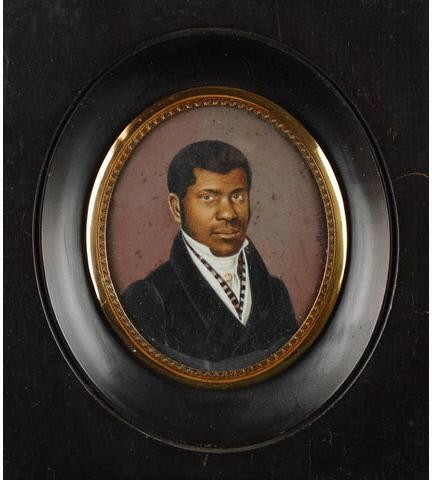
Venerable Pierre Toussaint (1766-1853) by Anthony Meucci, Public domain, via Wikimedia Commons

Venerable Pierre Toussaint (1766-1853)

Image: A 1825 paining of Pierre Toussaint by Anthony Meucci, Public domain, via Wikimedia Commons

When he saw the crowds, Jesus went up the mountain, and after he had sat down, his disciples came to him. He began to teach them, saying… You have heard that it was said, ‘An eye for an eye and a tooth for a tooth.’ But I say to you, offer no resistance to one who is evil. When someone strikes you on your right cheek, turn the other one to him as well. If anyone wants to go to law with you over your tunic, hand him your cloak as well. Should anyone press you into service for one mile, go with him for two miles. Give to the one who asks of you, and do not turn your back on one who wants to borrow. (Matthew 5:38-42).


Few people have lived these words like Venerable Pierre Toussaint. Born into slavery on a Haitian sugar plantation and taken to New York in slavery as an adult, he not only cheerfully served those who subjugated and claimed to own him, but contrived by cheerful, faithful service to earn enough money to buy others out of slavery and ultimately, upon earning his own release, to purchase a home that he shared with the poor, orphans, the sick, and others in need.

Teaming in other good works with his wife, who was among those for whom he purchased an acknowledgement of freedom, he ultimately came to be acknowledged as the de facto founder of Catholic Charities of the Archdiocese of New York.

Truly Venerable Pierre Toussaint offers a lesson from which many people might benefit.

Points to Ponder:

The Theological Virtues of faith, hope, and charity are explained in Sections 1812 to 1829 of the Catechism of the Catholic Church. Section 1822 teaches that “charity is the virtue by which we love God above all things for his own sake, and our neighbor as ourselves for the love of God.” (Compare Matthew 22:34-40)

Section 1825 teaches that the Apostle Paul has given the incomparable description of charity:

Charity is patient and kind, charity is not jealous or boastful; it is not arrogant or rude. Charity does not insist on its own way; it is not irritable or resentful; it does not rejoice at wrong, but rejoices in the right. Charity bears all things, believes all things, hopes all things, endures all things.

(Quoting 1 Corinthians 13)

How well did Venerable Pierre Toussaint’s behaviour meet Saint Paul’s description?

  • Did he demonstrate patience and kindness? It is reported that:
    • during his enslavement he accepted education from his enslavers, served them lovingly, and while still enslaved worked his way as an adult through apprenticeship to become a successful hairdresser for prominent New York women – including the wife of Treasury Secretary Alexander Hamilton – at a time when such women tended to use their maids for hairdressing; and that attracted a large a large clientele by his intelligence, artistry, and civility.
    • when the couple who claimed ownership of him lost their money and property and the husband died, Pierre willingly took on the role of supporting his former master’s wife, her new husband, her extended family, and his own still-enslaved relatives, financially and otherwise.
    • even after he was freed at the age of about 40, he corresponded with the family that had claimed to own him.
    • following his release, he bought his sister’s freedom, along with the woman he married. After his sister died, he adopted her daughter.
    • together with his wife, became involved in a number of charitable efforts,
      • beginning by taking baked good to children at the Colored Orphan Asylum and donating money;
      • sheltering orphans, sick people (including at least one priest) and others in need in his own home, and supporting them in education and vocational training;
      • organizing a credit bureau, an employment agency, a refuge for priests and needy travelers;
      • helping immigrants, particularly by using his ability in the French language to help Haitian refugees;
      • helping open the first Catholic school in New York for Black children, at St Vincent de Paul on Canal street.
    • In doing these things, it is reported that he worked assiduously to control his own fiery temper.
  • Did Venerable Pierre show jealousy, or boast? Is he reported to have been arrogant or rude? Does he appear to have insisted on having his own way? Was he irritable or resentful? It is reported that:
    • he acknowledged that he consciously fought his own naturally quick temper and supressed a talent for mimicry, explaining that he realized that anger and mimicry from him might not be well tolerated by the society that claimed power over him.
    • from the time he was allowed to go free in 1807, until New York abolished slavery twenty-two years later, he risked abduction and re-enslavement by bounty hunters simply by going outdoors, walking everywhere because Blacks were not allowed to use public transportation.
    • he helped raise funds for the first Catholic orphanage in NY, which was opened by the Sisters in Charity, even though it served only white children.
  • Did Venerable Pierre rejoice at wrong, or at right? It is reported that:
    • upon being released from legal bondage he took the surname Toussaint in honour of the Catholic Haitian revolutionary, Toussaint L’Overture, who led his country to freedom while remaining faithful to his beliefs.
    • he attended Mass daily for 66 years, and contributed liberally to the construction of the new Saint Patrick’s.
    • at the time of the proclamation of venerability in 1997, some people are reported to have disagreed with the declaration, on grounds that although he had been born into slavery, he did not resist his enslavement, or work to end slavery as an institution.

At his death, Venerable Pierre was buried in the cemetery of Old Saint Patrick’s Church in New York City. In the 1950s, the Irish-American John Boyle O’Reilly Committee for Interracial Justice began a campaign to research and publicize Venerable Pierre’s life story. In 1968, Cardinal John O’Connor, Archbishop of New York, named him a Servant of God and transferred his body to the crypt of Saint Patrick’s Cathedral; he remains the only lay person interred there. In 1997, he was declared venerable by Pope Saint John Paul II.

As Saint Paul put it, “charity bears all things, believes all things, hopes all things, endures all things.” (1 Corinthians 13:7)

Sources:

  1. Catechism of the Catholic Church, 1826.
  2. https://slaveryandremembrance.org/people/person/?id=PP051
  3. https://www.nytimes.com/2024/02/18/obituaries/pierre-toussaint-overlooked.html
  4. Franciscan Media: https://www.franciscanmedia.org/saint-of-the-day/venerable-pierre-toussaint/
  5. https://en.wikipedia.org/wiki/Pierre_Toussaint


The Duty to Participate: beginning a new conversation.

Canada is not alone in having elected new leaders within the last year. Nor is it alone in having elected leaders who, like most human beings, are likely imperfect. But it does appear that Canada may face its best opportunity in years for beginning a respectful and democratic civic dialog, centred on Catholic values. Maybe its time for us to start talking to those we’ve elected to lead us.

Canada’s new Prime Minister Mark Carney has publicly acknowledged that he professes Catholicism, and he openly attended Pope Leo’s inauguration Mass – even going so far as to praise the Pope’s homily, and to explain to the press why he knelt during Mass. It also reported that he regularly “goes to Catholic church.”

It is also true that he has openly declared his unreserved support for abortion rights, perhaps even for their elevation to the status of protection under the Charter of Rights and Freedoms. This is obviously difficult for faithful Catholics to accept, particularly as abortion in Canada is legal for any reason, and practiced right up to the moment of birth.

It is a topic we should certainly take up with him.

On the other hand, he speaks Catholic when he wants to. It is reported, for example, that he once attended a Vatican seminar on the topic of building an economy that works for everyone, and that when he got home he wrote a book about how that might be done - a book that is framed in terms consistent with Catholic social teaching, and appears to be informed by it, even if it does not stress that fact.

The question we face is: do these things give us enough ground to at least try to start a respectful conversation, that includes both points of agreement and points of disagreement?  We should perhaps reflect carefully on that, as recent history suggests that it might be unwise to wait on a better chance.

If we do want to start such a conversation, it would be well to start soon. Despite the fact that Mr. Carney has barely even begun to work at his new job, criticism is already flowing toward him, including unfortunately a measure of sharp personal criticism from Catholics. Left unchecked, this stream seems likely to sweep us right back down the drain of endless bickering and nagging, rather than constructive conversation, especially as it is sometimes difficult to discern legitimate Catholic grounds for complaint, as opposed to mere personal preferences.

For example, one charge frequently leveled at Mr. Carney, by Catholics and others, is that he is a globalist banker, a member of a “post-national management class.” This certainly sounds ominous, but is it necessarily damning?  It’s clear the activities of many global bankers and managers are not aligned with Catholic thought.  But is it not possible that some global bankers and managers might be good people, even Catholics, even if they are both bankers and managers at the same time? It would help if particulars of such complaints were be provided, but they too seldom are.

So we are left with the question “is it a sin, in and of itself, for a Catholic (or anyone else) to be a globalist?” It would seem not. Much seems to depend on what kind of globalism is intended, and how it is approached. For example, the original, largest and oldest global organization in the world is the Roman Catholic Church, which has used its worldwide reach to accomplish untold good, along with a few things that we likely could have done better.

As Pope Saint John Paul II told the Pontifical Academy for Social Sciences 24 years ago,

Globalization, a priori, is neither good nor bad. It will be what people make of it. No system is an end in itself, and it is necessary to insist that globalization, like any other system, must be at the service of the human person; it must serve solidarity and the common good.

One of the Church’s concerns about globalization is that it has quickly become a cultural phenomenon. The market as an exchange mechanism has become the medium of a new culture. 1 Many observers have noted the intrusive, even invasive, character of the logic of the market, which reduces more and more the area available to the human community for voluntary and public action at every level. The market imposes its way of thinking and acting, and stamps its scale of values upon behaviour. Those who are subjected to it often see globalization as a destructive flood threatening the social norms which had protected them and the cultural points of reference which had given them direction in life.

What is happening is that changes in technology and work relationships are moving too quickly for cultures to respond. Social, legal and cultural safeguards – the result of people’s efforts to defend the common good – are vitally necessary if individuals and intermediary groups are to maintain their centrality.2 

It seems that concerns such as this are what we should focus on, rather than condemning ideas out of hand. And it would seem wise to start working now, speaking up and encouraging or correcting where necessary, and doing what we can to ensure that any globalist initiatives are established in responsible fashion, that they seek to do only that which is needed and appropriate, and that they are consistent with the principles of both solidarity and subsidiarity, rather than mere schemes for maximizing profit.

We could start by listening.  For example, this is exactly where Mr. Carney’s book begins, in what sounds like close agreement with Saint John Paul. From the introduction to Value(s), for example:

These are the questions that this book seeks to explore.  It will examine how our society came to embody Wilde’s aphorism – knowing the price of everything and the value of nothing. How by elevating belief in the market to an inviolable truth we moved from a market economy to a market society.  And how we can turn this around… [to build an economy underpinned by the values and beliefs of]:

  • dynamism to help create solutions and channel human energy;
  • resilience to make it easier to bounce back from shocks while protecting the most vulnerable in society;
  • sustainability with long-term perspectives that align incentives across generations;
  • fairness, particularly in markets to sustain their legitimacy;
  • responsibility so that individuals feel accountable for their actions;
  • solidarity whereby citizens recognize their obligations to each other and share a sense of community and society; and
  • humility to recognize the limits of our knowledge, understanding and power so that we act as custodians to improve the common good.3

Much will depend, obviously, on whether Mr. Carney actually tries to build such an economy, and how well he does with it, and how well his values and beliefs turn out to align with Catholic thought.

It seems like we might be better off trying to have collaborative input into this than to stubbornly refuse to play.  Saint John Paul is already pointing the way:

A sound globalization, carried out in respect for the values of different nations and ethnic groupings, can contribute significantly to the unity of the human family and enable forms of cooperation which are not only economic but also social and cultural. Globalization must become more than simply another name for the absolute relativization of values and the homogenization of life-styles and cultures. For this to happen, Christian leaders, also in the commercial sphere, are challenged to bear witness to the liberating and transforming power of Christian truth, which inspires us to place all our talents, our intellectual resources, our persuasive abilities, our experience and our skills at the service of God, our neighbour and the common good of the human family.

Likewise the charge that Mr. Carney is a member of a new government-by-management class. Is not government, no matter its form, simply another word for management? It is true that as the world’s population has grown and come together, with cultures mingling, blending, and confronting one another more closely than ever before, the “management” imposed by our governments has grown ever more intrusive, our “personal space” shrinking further and further. That is deeply lamentable. But is it avoidable? If so, how? Farmers of the 1700s, for example, resented the encroachment of towns and government. Cowboys of the 1800s disliked fencing of the land, and railroads crossing their grasslands; railroad magnates and other capitalists of that and other eras disliked securities regulation. And I believe it would not be difficult to gather evidence that the inhabitants of North America at the time the Western techno-commercial culture arrived were not thrilled, either.

Few of us welcome the idea of over-management. But again, it would seem that the answer is probably not flat (and especially futile) rejection.  Rather, a careful, principled, gathering, and democratic approach to a process that has already begun is perhaps called for, offering thoughtful, justified policy alternatives.

Perhaps we are called to wipe off our glasses and start reading a little more closely, paying attention not only to our fears but both the broad scope and specific details of proposals, bearing in mind always that we share this planet, standing before God with a vast number of other people, and look for opportunities that balance solidarity with subsidiarity, the common good with individual rights and responsibilities.

Do we really want to wait until we have a leader who is perfect in the eyes of everyone before we start that conversation?  Mr. Carney appears to have brought us more reason for hope than any of his recent predecessors.  It’s far from perfect, but would it not be a matter of prudent stewardship to try to work with it?

Try writing him a letter, telling him what you like and don’t like about his past and his plans for the future, so far as they have been announced. Copy your local MP and your provincial or territorial representatives. Invite them all to join us in reflecting on the prayer Pope Francis shared at the bottom of his encyclical Fratelli tutti.4

Notes:

  1. Emphasis in original.
  2. Address of the Holy Father John Paul II to the Pontifical Academy of Social Sciences, Friday, 27 April 2001 (https://www.vatican.va/content/john-paul-ii/en/speeches/2001/april/documents/hf_jp-ii_spe_20010427_pc-social-sciences.html)
  3. Carney, Mark, Value(s): Building a Better World for All, Signal Press, 2021 (pp. 3, 8-9)
  4. See this issue’s prayer at bottom.

Conscience Conversation: 2020 – a year in civic evangelization

Brendan: Well Matt, here we are—the end of 2020. The Holy Spirit moves in constantly surprising ways, and in that spirit (pun intended), it is amazing to reflect on how we thought 2020 was going to go versus how it actually went. I think about the process of putting together our strategic plan in late 2019 and early 2020, and thinking we would go about implementing it–not to mention, begin the search for funding to support the Catholic Conscience apostolate. 2020 had different ideas in store.

The pandemic and lockdown completely upended our plans for the year. But in its own way, it provided different avenues for us to go about our mission. For instance: were it not for the lockdown, we wouldn’t have moved events into a webinar format. But we did and had two excellent conversations on serving our neighbours in COVID-19 and serving as a Catholic on boards and committees. At the same time, we took time to bring together the right voices to help plan new programs for 2021–including a candidate formation and training program I’m so excited to launch.

Beyond that, we worked with partners in Saskatchewan and British Columbia to launch the Catholic Action campaign for both those provincial elections. What a leap forward that was for our work ministering to and engaging Catholic voters! And with an extraordinary group of lay leaders and bishops in both those provinces. I’ll leave that one to you, Matt, to describe in more detail.

In the wider world of Catholic civic and political leadership, I would be remiss not to mention the publication of Fratelli tutti. A number of those we work with have described it to me as Catholic Conscience’s mission in the form of an encyclical letter. Reading it, I couldn’t agree more. The Holy Father dedicated a sizeable section of the encyclical to “a better politics”, which we discussed at length with our friends in the Diocese of Saskatoon.

I am still digesting the Pope’s articulation of the idea of political love. Both you and I, Matt, have always taken the Pope’s concept of “politics as one of the highest forms of charity when ordered to the common good” as a real call-to-action in this work. But the way he expanded on this core idea to articulate a principle of political love. In arguing convincingly that those in politics–especially those who call themselves disciples of Christ!–must exercise a tender love for others, he asks bold questions for those whose vocation brings them into the realm of political and civic life: “How much love did I put into my work?” “What did I do for the progress of our people?” “What mark did I leave on the life of society?” “What real bonds did I create?” “What positive forces did I unleash?” “How much social peace did I sow?” “What good did I achieve in the position that was entrusted to me?”

I am left pondering these questions and am excited to continue mining the wisdom and insight Fratelli tutti offers.

In sum, I am so grateful for the ways the Holy Spirit has moved and guided the work of Catholic Conscience since its inception. Though this is only my second year working in this apostolate, I am reminded again and again how critical a ministry of Catholic civic and political leadership is in this moment in the history of our Church and our faith. I pray that the Lord guides us exactly where he wants us to be.

Matt, what are you most grateful for in 2020?

Matt: Thanks, Brendan. For me, the most gratifying and unexpected developments were the really extraordinary responses of our colleagues in Saskatchewan and British Columbia. The staffs of the dioceses in Regina and Saskatoon, and the BC Catholic newspaper were truly amazing, providing guidance and suggestions for our platform comparisons and webinars, including especially the interviews they facilitated with five of the six leading parties in Saskatchewan.

And the BC Catholic devoted twelve full pages of their pre-election issue to our platform materials.

Really, it’s marvelous the way the Universal Church can pull together, when we’re focused on the common good.

And of course, we owe a tremendous debt of gratitude to several individuals and organizations for their very kind words – including Archbishops Bolen of Regina and Miller of Vancouver, and the communications offices in Regina and Saskatoon.

With their help, we were able to provide thousands of people with materials designed to help them make up their own minds, prayerfully and intelligently, in casting their votes. And most of them were between 24 and 35!

Brendan: It’s been a blessed year, Matt. I’m so grateful for the movements of the Holy Spirit in driving this apostolate forward for God’s purposes. I have felt the wind at our sails, despite the strange circumstances of the year. It’s funny: I hadn’t thought of it so vividly as an apostolate until a friend of ours in Saskatchewan used the word. But once I heard it, it felt like the right word. Working with other disciples of Christ, I feel we are playing a small part in evangelizing the culture and building the Kingdom here on Earth. And for that, I will always be grateful.

Merry Christmas and a happy New Year, from all of us here at Catholic Conscience!

Matthew Marquardt is President of Catholic Conscience, of counsel to a Toronto law firm, and a parishioner at St. Patrick’s Catholic Church, as well as a lay associate of the Redemptorists.

Brendan Steven is Executive Director of Catholic Conscience, a writer based in Toronto, active in Toronto’s Society of Saint Vincent de Paul and other Catholic institutions, and a parishioner at St. Basil’s Catholic Church.

Translate »
Skip to content