
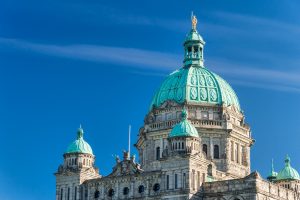
At a moment of internal turmoil amongst its opponents, B.C.’s governing party has called a snap election. Reasons sufficient to credibly support an early call are sadly lacking, along with adequate information to support voters in weighing voting decisions.
Rather than respecting the October 2028 date contemplated by the province’s fixed-election laws, the government has set the election for October 24, 2026 – a full two years early. At the time it called the election, the governing party’s website provided neither any complete platform statement nor any current statement of its guiding principles. Voters were simply left to shift for themselves, opposing parties left to scramble to support responsible decision-making.
Catholic Conscience was able to pull together a copy of the party’s constitution, dated 2021; a single-page summary of policy highlights entitled “An Action Plan for You – Platform Highlights”, and the provincial budget the party prepared for 2026.
The following list of issues that voters may wish to consider in discerning their votes include the following, which was provided to Catholic Conscience by other Catholic sources. Some involve decisions the current government has already made; others are still being debated, challenged, or reconsidered.
This list is intended as a starting point only, and not as a complete report of the current government’s record.
We hope to expand upon and improve it, but given the very short time allotted to us, we are sharing it as is.
In considering the following, voters might ask themselves:
- Who is likely to benefit from from an early election call at at time when the governing party’s opponents are in a state of disorganization? Do the voters or the public benefit?
- Who might be hurt by such election calls? How might the vulnerable or marginalized among us fare? Is it possible to tell how others might fare when credible and comprehensive policy statements have not been shared?
Please inform yourself conscientiously, pray devoutly, and vote faithfully.
- Medical assistance in dying: oversight and safeguards
Investigations by The B.C. Catholic and Canadian Catholic News found thousands of errors and reporting problems in B.C.'s medical assistance in dying (MAiD) records for 2023 and 2024. The findings raise questions about how closely the province monitors the system and whether problems are properly followed up. The reported errors do not necessarily mean assisted deaths were unlawful.
More recent Catholic reporting has also examined how much physicians are paid for providing MAiD.
Status: The system remains in place, and questions about oversight, safeguards, and costs continue.
Sources:
- The B.C. Catholic — Provincial MAiD regime high on errors, lax on enforcement
- The B.C. Catholic / CCN — Thousands of errors found in B.C. MAiD cases
- CCN — MAiD can make B.C.'s euthanasia doctors rich, hidden figures show
- MAiD in Catholic hospitals and conscience rights
The province arranged for a separate MAiD facility beside St. Paul's Hospital in Vancouver rather than requiring the Catholic hospital to provide assisted dying within its own facilities. Catholic reporting in September 2026 confirmed the facility was operating. The arrangement is being challenged in court, with the government defending the right of religious hospitals to refuse to provide MAiD.
B.C. also brought in new rules governing health professionals, raising concerns about conscience rights.
Status: The MAiD facility is operating, but the court challenge remains unresolved. The new health-profession rules took effect in April 2026.
Sources:
- CCN — MAiD unit forced onto St. Paul's campus now operational
- CCN — B.C. Supreme Court to hear challenge involving faith-based hospitals and MAiD
- The B.C. Catholic — MAiD and the Catholic hospital
- Doctors of BC — Health professions legislation
- Drug decriminalization, safer supply and addiction treatment
B.C. began a three-year experiment in 2023 allowing adults to possess small amounts of certain illegal drugs without criminal charges. Following public complaints, the government restricted where drugs could be possessed and eventually ended the experiment in January 2026.
It also tightened its safer-supply program and moved toward more involuntary treatment for people with severe addiction and mental-health problems.
Status: Decriminalization has ended, but addiction treatment and public safety remain active issues.
Sources:
- B.C. government — Drug decriminalization
- The Tyee — Eby and Rustad agree on involuntary treatment
- Global News — B.C. changes safer-supply program
- SOGI, parental rights and schools
The Eby government continues to support SOGI 123, the teaching resources dealing with sexual orientation and gender identity in B.C. schools. Critics have raised concerns about parental involvement and what children are taught.
In 2024, the government also passed a law restricting disruptive protests near schools and extended it in 2026.
Status: Government policy remains in place, but SOGI and parental rights continue to be debated during the election campaign.
Sources:
- Global News — Law restricting disruptive protests near schools
- The Epoch Times — Conservative leader calls for removing SOGI resources
- Protection of churches and other places of worship
In April 2026, B.C. passed a law allowing qualifying churches and other places of worship to establish 20-metre protected zones around their entrances. The aim is to prevent intimidation and interference with worship, although the law also raises questions about the right to protest peacefully.
Status: The law is in place.
Sources:
- Canadian Catholic News — B.C. announces protection zones for places of worship and schools
- BC Laws — Safe Access to Places of Public Worship Act
- Indigenous rights, land ownership and DRIPA
The Eby government has faced major disputes over Indigenous land rights and how B.C. should apply its law recognizing the United Nations Declaration on the Rights of Indigenous Peoples (DRIPA).
These include an agreement recognizing Haida title, a court ruling involving Cowichan claims to land in Richmond, and another court case involving the Gitxaala Nation. The government tried to change parts of DRIPA in 2026 but backed down when it could not get enough support.
Status: Still unsettled. Court appeals, land ownership questions, and possible changes to DRIPA remain important issues.
Sources:
- The Tyee — B.C. backs off DRIPA changes
- The Epoch Times — Cowichan land ruling and provincial response
- B.C. government — Haida title agreement
- Residential-school investigations
The province continues to have a role in investigations at former residential-school sites, although B.C.'s main funding program began under Premier John Horgan, before Eby took office.
In June 2024, Eby's government joined an agreement with Williams Lake First Nation and the RCMP setting out procedures for possible future investigative work at St. Joseph's Mission.
Status: Investigations continue, but this is mainly an ongoing government responsibility rather than a major new Eby policy. Ground-penetrating radar findings should not be described as confirmed discoveries of human remains.
Sources:
- B.C. government — St. Joseph's Mission investigation agreement
- The Epoch Times — Kamloops residential-school investigation update
- Provincial finances, taxes and affordability
B.C.'s 2026 budget projected a record $13.3-billion deficit. The government raised the lowest provincial income-tax rate, changed the terms of property-tax deferrals for seniors, and announced plans to reduce public-sector staffing.
In April 2025, it also eliminated the consumer carbon tax.
Status: These are government decisions already made, although taxes, spending, debt, and affordability remain major election issues.
Sources:
- The Tyee — B.C. budget brings record deficit
- The Epoch Times — Tax increases and provincial deficit
- Canadian Press — B.C. eliminates consumer carbon tax
- Long-term care and seniors
In February 2026, the government put seven planned long-term care facilities on hold, including projects in Abbotsford and Chilliwack. It cited sharply rising construction costs.
The decision came amid long waiting lists for residential care, while the government said it wanted to put more emphasis on helping seniors remain at home.
Status: The projects remain on hold, and how B.C. will meet growing demand for seniors care is unresolved.
Source:
- Housing affordability and short-term rentals
The Eby government introduced measures intended to increase housing construction and restrict short-term rentals, including Airbnb-style accommodation. The changes have been controversial in some tourism communities.
At the same time, budget cuts and delays have put planned affordable-housing projects at risk, including more than 3,500 homes identified in a Metro Vancouver report.
Status: The rental rules are in place, but housing costs, construction delays, and funding remain active issues.
Sources:
- The Tyee — Affordable housing projects affected by budget cuts
- The Tyee — Short-term rental restrictions in Tofino
- Poverty, families, disability support and education
The government ended a special fund that helped schools provide supplies and other assistance to families struggling with costs, while pointing to its school-meal program and other supports.
The 2026 budget did not increase basic welfare or disability-assistance rates, although it added funding for some services for children with special needs. B.C. has also continued its longstanding funding arrangements for eligible Catholic and other independent schools.
Status: These are current funding decisions. Support for low-income families, people with disabilities, and schools remains an ongoing issue.
Sources:
- The Tyee — B.C. ends school affordability fund
- BC Teachers' Federation — Education budget
- B.C. government — Independent-school funding
- Oil pipelines, LNG and energy development
The Eby government has faced pressure over proposals to bring more Alberta oil to the B.C. coast, along with disagreements over natural gas development, Indigenous consultation, and environmental commitments.
In July 2026, the province approved an exemption allowing Phase 1B of the Tilbury LNG expansion to proceed without the usual utilities-commission certificate. Ottawa is also pursuing a proposed oil pipeline to Delta, although that is a federal initiative rather than a B.C. government approval.
Status: The Tilbury decision has been made, but pipeline proposals and broader energy policy remain active issues.
Sources:
- B.C. government — Tilbury LNG decision
- Canadian Press — Tilbury LNG expansion
- The Epoch Times — Proposed West Coast oil pipeline
- Forestry, jobs and environmental protection
B.C.'s forest industry continues to struggle with mill closures, job losses, and uncertainty over timber supplies. The government has tried to speed up forest planning, but progress has been slow.
In early 2026, it also put on hold plans to require more financial security from industrial operators to help cover future cleanup costs.
Status: Forestry and employment remain ongoing challenges. The industrial cleanup initiative is on hold.
Sources:
- U.S. tariffs and B.C.'s response
In 2025, B.C. removed American liquor from provincial sales in response to U.S. tariffs. The government also passed legislation giving it special powers to respond to trade threats, prompting concerns about how much authority cabinet should have without normal legislative oversight.
Some parts of the law were repealed in November 2025, but powers over government purchasing remain in place following changes in 2026.
The tariff dispute also raised broader questions about economic fairness and the common good, discussed in The B.C. Catholic from the perspective of Catholic social teaching.
Status: Some emergency measures have ended, but the government still has special purchasing powers. Trade relations with the United States remain an active issue.
Sources:
- The B.C. Catholic — The case for a Just Tariff theory (commentary)
- The B.C. Catholic — Canada's selective patriotism (commentary)
- The Epoch Times — U.S. liquor restrictions
- The Epoch Times — Debate over special government powers
- BC Laws — Current tariff-response legislation



 In the first installment of a series of Rosary reflections highlighting the

 Download