Pour lire cet article en français, veuillez utiliser le bouton avec le drapeau ci-dessus.
Vous pouvez également télécharger le document pour une meilleure traduction.
Merci de votre patience pendant notre développement.
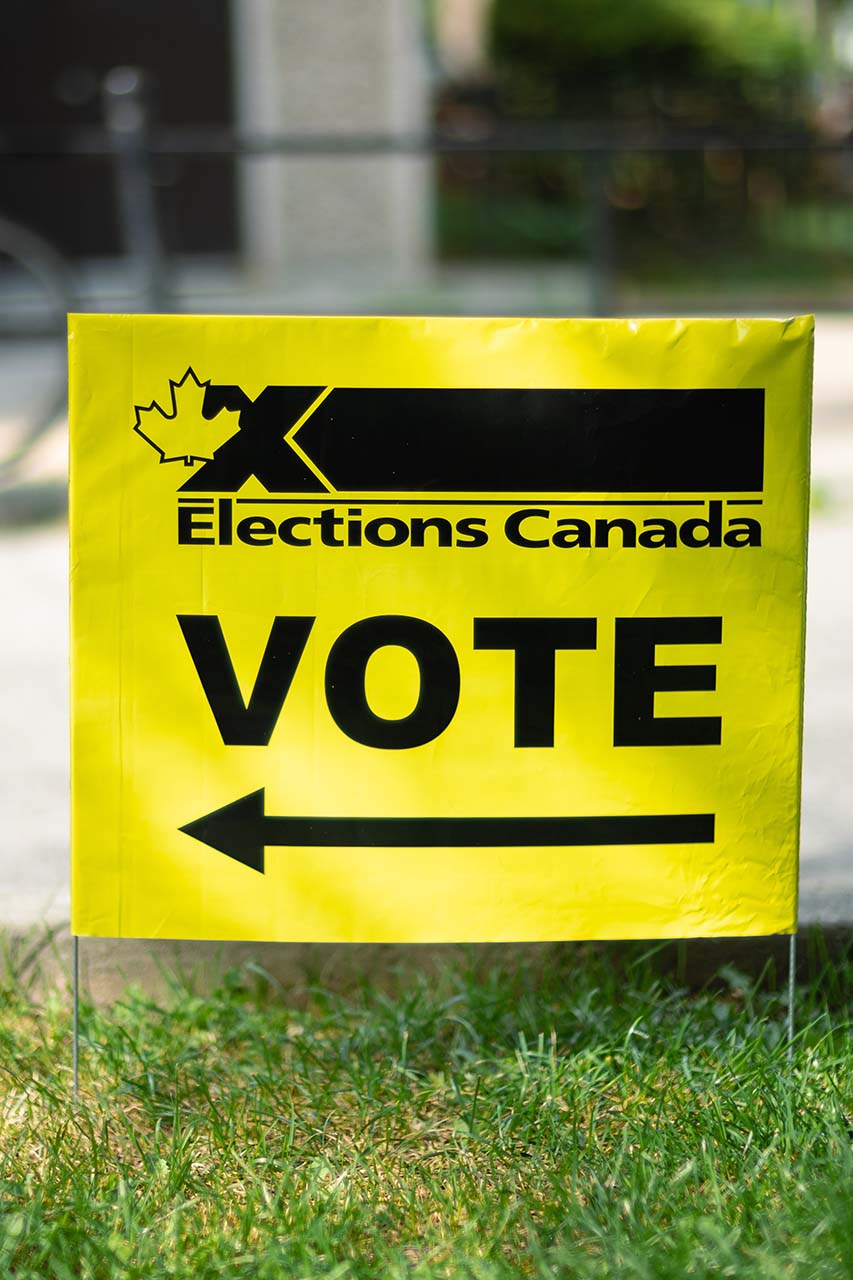
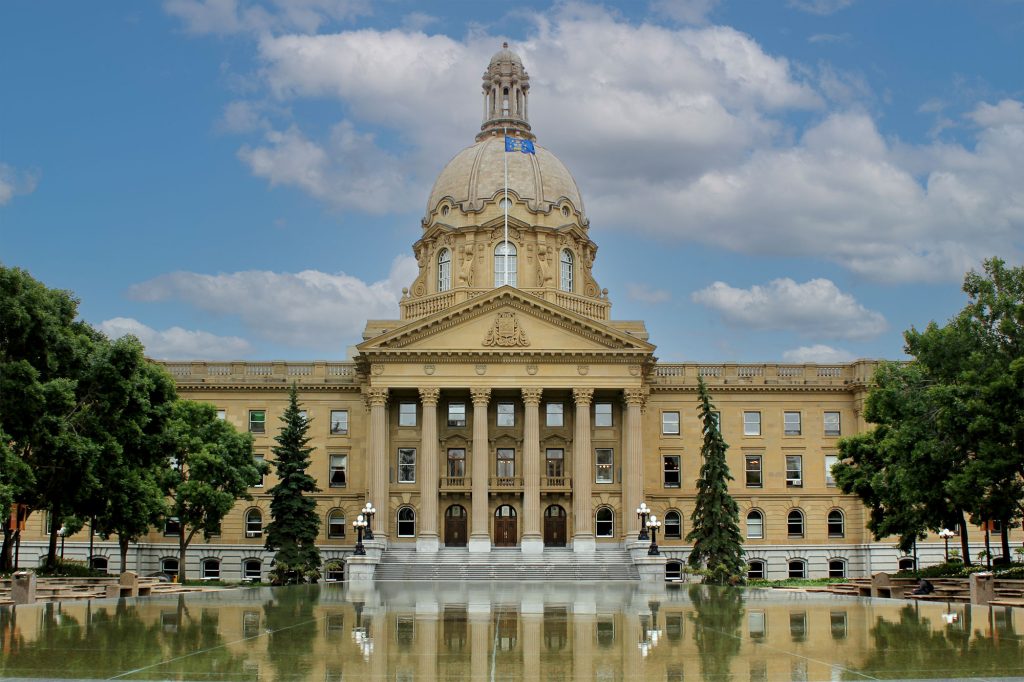
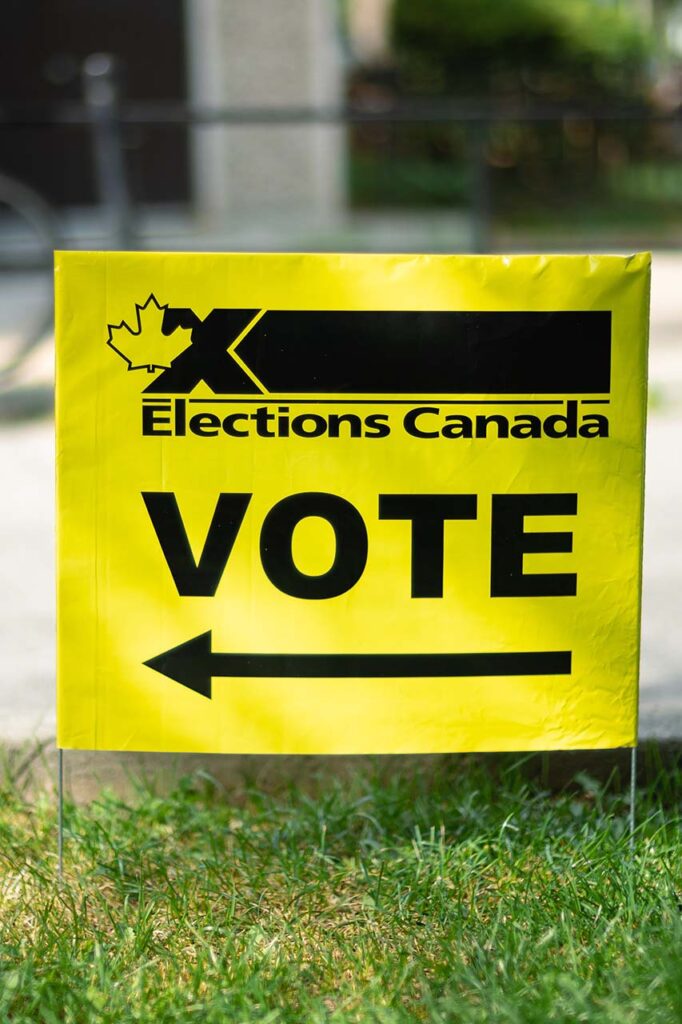
On October 19, 2026, the province of Alberta will hold a referendum concerning whether the province should seek to separate itself from the rest of Canada and try making a go of it as an independent nation. Importantly, this initial referendum does not seek conclusive authority from voters for separation. Rather, it poses the preliminary question of whether Alberta should invest time and money in defining and proceeding toward a future, binding referendum on its future relationship with Canada. Many Catholics and people of good will are asking how to evaluate what is at stake, and how to form their conscience responsibly.
To navigate the moral questions involved, it is important to first grasp the historical, constitutional, and political dynamics that have brought Alberta to this moment.
Historical Context
Some observers have seen roots of the modern Alberta separatist movement as originating as far back as the North American “Old West,” extending from northern Mexico through Texas and the American-Canadian Rocky Mountains via the early ranching culture and folklore which popularized rugged independence. Years later, the rapid establishment of the oil patch fueled the development of a sub-culture entrenched in maxims of self-reliance, based at least partly on early European settlement patterns which gave rise to distinct frictions with the relatively more-established and interdependent East. Simultaneously, many of the early homesteaders established cultures of mutual support as evident in the thriving cooperative movement. In several instances, like minded groups of migrants established communities scattered across the West to experiment with innovative social initiatives. A remaining example of such institutions is the Alberta Treasury Branch.
Seeds of Alberta’s current separatist sentiment can be dated, for example, to the 1930s, when Ottawa blocked the provincial Social Credit government’s proposed monetary reforms.1
Sentiments of Western alienation surged during 1970s’ global energy crisis, when Pierre Elliott Trudeau’s government created Petro‑Canada (1975) and the National Energy Program (1980). Ottawa justified these measures as necessary for protecting national economic stability and energy security; Albertans perceived them as federal interference with or even appropriation of provincial wealth and derogation of the right of self-determination. 1
This became the first major fracture between Alberta and the federal government and the foundation of modern Western Alienation.
From its start, Canada’s constitutional structure has placed several industries under federal jurisdiction (federal departments, Crown corporations, banking, telecommunications, interprovincial transportation, broadcasting, First Nations governments; Constitution Acts 1867–1982, ss. 91–92). Other categories, such as Alberta’s primary exports, oil and gas, fell outside these categories and were nominally relegated to exclusive provincial jurisdiction.2
Subsequent and repeated federal intervention through the use of tax, trade, and other laws has therefore often been experienced by Albertans as unwarranted expropriation and a violation of constitutional intent, and therefore repudiation by the federal government of Canada’s agreed founding principles. Section 91 of the Constitution, for example, was cited in justifying the National Energy Program as a “matter of national interest” and asserting control over provincial oil and gas prices. Many Albertans argue that Ottawa has manipulated the definition of “national interest” to suit itself, overriding constitutional provincial autonomy as a matter of federal political convenience. 3
Ensuing decades have not tended to heal the rift, particularly during periods of Liberal control in Parliament. Perceptions of undue intervention have been aggravated by federal responses to the COVID pandemic, environmental initiatives such as the carbon tax, agricultural programing and marketing initiatives such as the former Canadian Wheat Board, and increasing polarization on a number of social issues.
For many Albertans, these policies have represented not just disagreement but a threat to their very economic identity and future. Alberta’s political culture, deeply intertwined with petroleum-based aspects of the American economy and with conservative aspects of “oil patch” culture, is perceived as raising two existential questions:
-
- Can Alberta and Ottawa work together reasonably, in accordance with agreed durable rules?
- Can Ottawa protect the provinces from external threats?
Key Players and Their Positions
The Alberta Separatist movement has not coalesced as a single centralized group or figure, but rather subsists as a loose coalition of civically active groups with an overlapping objective of sovereignty. Many of these groups clash on their approaches to and their ultimate goals for sovereignty.
- “The Alberta Prosperity Project is a non-partisan, non-profit educational initiative working to unite Albertans around the case for sovereignty.” One of their approaches includes encouraging supporters to join the United Conservative party to influence party policy from the inside. Their Stay Free Alberta petition is intended to demonstrate public support for the independence initiative. Some of Alberta’s First Nations challenged this petition on grounds that they were not adequately consulted and sovereignty proposals risk undermining of treaty rights. Some of the Project’s statements have been challenged as not uniformly upholding the dignity of the individual. The Project has also been criticized for meeting directly with the current United States administration in the midst of national instability.
- LetsTalkAlberta exists to ensure that “Albertans are informed, engaged, and empowered” when considering the future of the province. “By hosting open conversations in communities across Alberta, we provide a space where questions can be asked, ideas challenged, and the facts explored so that Albertans can make the most important decisions about their future with confidence. “
- The Centurion Project, advocates adoption by the Alberta United Conservative Party of independence policy resolutions. “Our Mission: To recruit, equip and mobilize a team of community leaders across the province of Alberta to take on the task of winning Alberta's sovereignty.”
Provincial ‘Remain’ groups:
- Forever Canadian: a grassroots non-partisan movement launched by former Deputy Premier of Alberta Tomas Lukaszuk, this group gathered more than 400,000 signatures on a petition to counteract or pre-empt a separatist initiative. They wish to affirm Alberta’s ongoing place in Canada.
- Vote to Stay: a third-party advertising group led by former federal Conservative cabinet minister Monte Solberg, and joined by former cabinet colleague/former Alberta Premier Jason Kenney, as well as former Alberta finance minister Travis Toews. Their purpose is to “unite Albertans who want to protect Alberta’s future, defend our prosperity, and keep Alberta strong within a united Canada — while motivating every Albertan who believes in staying in Canada to show up, speak out, and vote.” (source)
- Lead Not Leave: is a coalition of academics, politicians and journalists, including Ken Boessenkool, Andrew Leach, Jared Wesley, and Jen Gerson, among others, working together to convince voters that “the province’s future is strongest inside a united Canada.”
Alberta Stakeholders
- Indigenous Nations are constitutional actors whose rights, land titles, and jurisdictional authorities predate both Alberta and Canada. Their relationship is with the Crown, not with the province, and their treaty rights are protected under Section 35 of the Constitution Act, 1982. While a vote for separation and subsequent independence could take years to implement even under the most conducive conditions, Indigenous Nations could have standing and authority to add further delay as they seek to challenge or stall the independence project.
- Industry and Economic Actors: many of the main economic drivers in Alberta are risk averse, highly sensitive to investment instability, dependent on interprovincial trade, federal inspection systems, and export markets. Some actors support sovereignty rhetoric as leverage against federal policies but not actual separation.
Outside Alberta within Canada
- The federal government. Led by Prime Minister Mark Carney, the federal government has been notably quiet on the separation file, focusing instead on national economic stability and external threats to Canada. Conversations concerning economic irritants unique to Alberta have touched on subjects relevant to both external threats and internal upheaval.
- The official opposition, led by Pierre Poilievre. Mr. Poilievre has positioned himself as the only federal leader capable of counteracting the separatism threat and addressing Alberta’s grievances. He argues that his approach to policy, similar to previous Conservative governments, would remove the conditions that make separation appealing to some Albertans. 4
Outside of Canada
- Both Russian and American actors have been accused of executing pro-separatist social media messaging. 5
- Human Dignity. The Church teaches that every political decision must uphold and promote the inherent dignity of every person. The most important duty of governments is to create conditions that enable individuals to find and live in accordance with the truth, which is God. This is the first and inviolable principle of Catholic Social Teaching.This principle is violated, for example, when rhetoric dehumanizes opponents or seeks to treat people as leverage, rather than to help them along their own individual paths toward truth.
- Solidarity: we are all unique parts of the one body of Christ. What affects anyone, for good or for bad, whether they be sitting next to me or on the other side of the planet, alive now or in distant future generations, affects me as it does them.Solidarity is the antidote to fragmentation. Pope Leo has made it a central pillar of his pontificate. If this principle is to be respected, then those who are outside Alberta should not abandon their Albertan brothers and sisters in their time of strain. Similarly, Albertans should consider whether the timing of the separation conversation might undermine Canadian unity at time when it is of prime importance to others.The point is not to ignore grievances, but to look for ways to address them without breaking communion. Unity founded on proper values is a moral good. In Fratelli tutti Pope Francis exhorts us to resist polarization and reject tribalism, favouring instead bridge building and reconciliation as approaches over rupture. Some separatist rhetoric can stoke resentment, amplify grievance, frame politics as warfare, and undermine trust in institutions, undermining the principle of solidarity.
- Subsidiarity: this fundamental principle is at the core of both Catholic teaching and the grievance between Alberta and the federal government. As a means of ensuring that all individuals and all associations and organizations of human beings are empowered to chart their own free courses through life, all decisions should be made at the lowest responsible level, with all required support from higher levels. Higher levels retain the responsibility to intervene when lower levels cannot protect the common good. Many of the sources of friction feeding separatist sentiment can be viewed as questions of subsidiarity. What are, in fact, the proper roles of federal and provincial governments in issues raised in the separation discussion?It can furthermore be helpful to examine the ramifications of potential separation on the relationships between other levels of government, including municipal governments and First Nations Bands. Some Albertans have reported feeling restricted in their rights to freely and openly participate in political processes without being outcast because of their political views respecting either Alberta or Canada.
- The Common Good: Catholics and people of good will must carefully consider whether the proposal to separate Alberta from Canada would promote the flourishing of all people, not only within Alberta but outside it as well. Such a project would seemingly tend to undermine national unity, and with it at least some aspects of economic stability, treaty integrity, and social peace for many people, and interprovincial cooperation as well. Such disruptions seldom come without cost.Nor does it appear that consideration for vulnerable communities has been a prominent point of discussion. Has evidence been put forth to show that support and other social institutions will become more stable in an independent Alberta compared to within a united Canada? Any referendum that risks destabilizing the federation must be evaluated through this lens.
- Stewardship: there are many facets to consider in applying principles of stewardship to this debate. Alberta’s natural resources are gifts which should be managed responsibly. This includes long-term planning to protect future generations and ensure sustainable development. Stewardship also applies to economic systems and institutional integrity. Most importantly, stewardship can also apply in the question of the moral weight of the referendum. Catholics and people of good will have the duty to avoid unjustified acts of destabilization.
- Dignity of Work: Recent commentary has argued that many jobs could be adversely affected by separation. 6
Points to Ponder
- Truth and Formation of Conscience: Catholics have a moral duty to form their consciences through consideration of truthful, reliable, and proportionate information.
- Have we considered information and points of view from a variety of different sources? Have we attempted to assess potential biases, and the effect of such biases on any conclusions we might feel inclined to draw? Have we accounted for our own biases? Or do we tend to stick to those sources that seem to validate our own cherished points of view?
- Do we get our information from legitimate news sources? Social media? Our friends at home or office?
- Have we considered the potential impacts of biased electoral interference, for example from the United States, Russia, China, or others having an interest in resources located in Alberta?
- Freedom: We each have views on what freedom should look like. The Church teaches that just freedom is always rooted in truth and charity, and ordered toward the good.
- Do we interact respectfully with those whose vision of freedom differs from our own?
- Do we tend to use our freedom in ways that promote truth, growth, communion and the common good, or rupture and selfishness; or to perpetuate unjust control of others for the sake of power or greed?
- Justice: significant and often valid historical grievances have contributed to current separatist sentiment.
- Can or should the federal government do more to work toward promoting or in some cases restoring justice for Alberta and/or any other provinces?
- If the referendum passes, how can we, as governments, individuals, and a Church, ensure justice for marginalized individuals and minority communities?
- How can we protect treaty rights and uphold constitutional obligations for those who arrived in Canada first?
- Economic and Environmental Justice: One ground frequently cited in support of Alberta separation is the need to establish justice in control of resources located within the province. The federal government, it is sometimes said, has no right to control oil, gas, and other resources which are located in Alberta and therefore under the exclusive rightful control of Albertans.
- Is residency a just ground for claims to ownership and control of proximally-located natural resources? Is it fair for those living in a politically-defined region to claim sole ownership and control of natural geological resources located therein?
- To the extent that such claims are fair, what length of residence should be required to justify them? Multiple generations? A few years? A few weeks? Does birth within the region suffice? Should voluntary relocation to the proximity of valuable resources suffice to support such claims?
- If resources within Alberta are justly the property of Albertans, what about the Indigenous peoples who preceeded them? Are they not also located on the grounds of current or former First Nations?
- Can it not likewise be said that resources located in Alberta are also located in Canada? If so, why do they not rightly belong to everyone living in Canada? Could the same question be asked with respect to North America? The Western Hemisphere? The world?
- Who is the rightful owner of the earth’s resources?
- What rights do future generations have, especially with respect to non-renewable resources? Is it fair for current generations to exhaust supplies of non-renewable resources, without leaving some for those who will follow us? Among other considerations, history suggests that later generations sometimes discover highly valuable uses for substances previously known and used for lesser purposes. What does proper stewardship look like, in such a light?
- Convenience, too, could be a factor. Future generations may save even more labour from unused resources than we do. Should we consider their circumstances, in addition to our own, in consuming resources?
- Do the Church’s teachings on the Universal Destination of Goods provide any guidance on these questions?God intended the earth with everything contained in it for the use of all human beings and peoples. Thus, under the leadership of justice and in the company of charity, created goods should be in abundance for all in like manner. Whatever the forms of property may be, as adapted to the legitimate institutions of peoples, according to diverse and changeable circumstances, attention must always be paid to this universal destination of earthly goods. In using them, therefore, man should regard the external things that he legitimately possesses not only as his own but also as common in the sense that they should be able to benefit not only him but also others. (Gaudium et spes, 69)
- Is residency a just ground for claims to ownership and control of proximally-located natural resources? Is it fair for those living in a politically-defined region to claim sole ownership and control of natural geological resources located therein?
- The Common Good: does separation promote the flourishing of all Albertans, or only some? All Canadians, or only some? Have the voices of the poor and vulnerable been amplified or diminished?
- Good Governance:
- Arguments have been presented to the effect that many of Canada’s federal and provincial institutions are not operating optimally or in some cases appropriately, and that we are not stewarding them as well as we could be. But does that mean they should be abandoned? Is there any validity in an argument that we should stick around and try to repair what is broken or reform what is not working?
- Could there be more appropriate ways to resolve federal-provincial tensions? By voting for separation, would Albertans be jumping from the frying pan to the fire?
- As a land-locked country how, could Alberta increase or maintain valuable exports such as oil and grain without greater delay or increased regulation or involvement with the continuing Canadian government?
- If Alberta is divisible from Canada, it might also be true that sub-portions of Alberta are divisible from the new proposed country. Where do such arguments stop?
__________
Notes:
1 See, e.g., https://history.alberta.ca/energyheritage/oil/default.aspx; https://thecanadianencyclopedia.ca/en/article/social-credit
2 https://thecanadianencyclopedia.ca/en/article/distribution-of-powers
3 https://www.cbc.ca/news/politics/alberta-sovereign-act-constitutional-experts-1.6669936
4 for example, https://globalnews.ca/news/11893861/alberta-separatism-poilievre-federal-policies/; https://www.theglobeandmail.com/canada/article-poilievre-separatist-concerns-in-alberta-speech/
5 for example, https://thewalrus.ca/the-russian-money-behind-albertas-separatist-movement/; https://www.bbc.com/news/articles/cze2dnn8kgwo
5 for example, https://macdonaldlaurier.ca/rising-separatism-in-alberta-and-quebec-could-put-2-million-canadian-jobs-at-risk-trevor-tombe-in-the-hub/; https://www.thealbertan.com/beyond-local/new-afl-report-warns-of-disastrous-impact-of-separation-on-workers-12737153








 In the first installment of a series of Rosary reflections highlighting the